Soccer Betting Odds: What the Prices Really Mean for British Punters
 Available in US
A price on a football coupon looks like a single fact — Arsenal at 6/4, the draw at 11/5, the away win at 13/5 — but every one of those numbers has been built backwards from a margin the bookmaker wants to keep. Soccer betting odds in 2026 are the visible layer of that calculation: pick the right outcome at the wrong price and the win still loses money in the long run. This page walks through what the odds actually carry, where they sit on a betting slip, which markets matter for the Premier League and the wider game, and how ten licensed operators in Great Britain price their football books.

Data current as of October 30, 2026, checked against the Gambling Commission’s public register.
How a Soccer Betting Odds Market Is Priced: Margin, Payout and What Changes Between Bookmakers
What lives inside a decimal price
A decimal price is the number that multiplies the stake to give the return. Place £10 at 3.40 and a winning bet returns £34; the net profit is £24, because only the profit is paid on top of the stake. A 1.60 price returns £16 from a £10 stake, profit £6. The arithmetic is simple until more than one outcome sits on the same coupon — the home win, the draw, the away win on a 1X2 market — and the three prices together tell the rest of the story.

Reading a three-outcome match-result market
Take an illustrative match-result market priced at 2.10 / 3.40 / 3.60. The “overround” — the slice of every pound staked that the bookmaker keeps — is the gap between what the three prices would pay out if every outcome returned the stake exactly and what they actually do. Add the implied chances together and the total comes out above 100%; the excess is the margin.
Working it through for one example: 1 divided by 2.10 is 0.476, 1 divided by 3.40 is 0.294, 1 divided by 3.60 is 0.278. Adding the three gives a payout share of about 1.048 — wait, no, the correct reading is the inverse: 0.476 plus 0.294 plus 0.278 equals 1.048, but a payout share above one is impossible because something paid out. The right calculation is to invert the sum: 1 divided by 1.048 equals a payout share of about 95.4%, and the margin sits around 4.6%. That is the band a typical Premier League match-result market runs at across major UK books — somewhere between roughly 2% on the deepest events and 8% on the thinner fixtures, with most of the featured matches sitting in the middle.

A price printed on its own never tells the bettor this number. Two bookmakers quoting 11/10 on the same selection may have built it from different margins, and a tighter price on a single outcome can still carry a heavier margin across the rest of the market. The shape of the spread is the picture to read, not the headline number.
Why odds move before kick-off
Prices are not fixed when the coupon is printed. A Saturday afternoon Premier League market might open with Liverpool at 4/5 on Sunday night, shorten to 8/11 by Friday morning as the money comes in, and drift back out to 4/5 again after the team news lands. The movement reflects where the bookmaker’s exposure sits, not where the “correct” price lies; a popular side gets backed and the price shortens to balance the book.
For in-play markets the cycle is faster. A goal in the 23rd minute changes the implied chances on every remaining outcome, and the algorithm re-prices the whole market inside a second. Anyone holding an open position on that match is now facing a market that no longer matches the one they entered, and a cash-out value appears as the price the bookmaker is willing to settle at right now. That is its own product, with its own margin built in, and the bettor is paying for the convenience.
Fractional versus decimal, and the British convention
UK punters have grown up on fractional odds — 11/10, 12/5, 13/5 — and the major British books still default to that view. A growing number of operators show decimal odds as an alternative (and as the default on the betting exchange tier of the market), and the conversion is mechanical: 11/10 in fractional is 2.10 in decimal, because 1 plus 11 divided by 10 equals 2.10. Both numbers name the same price, and the question is which one the bettor reads fastest. Each UK bookmaker account lets the customer pick a view; the price underneath does not change.

Best Odds Guaranteed on the racing slip
A different kind of price protection runs on British and Irish horse racing. William Hill pays Best Odds Guaranteed from 8am on the day of the race, on single and multiple bets, with ante-post, tote and pari-mutuel bets excluded. If the starting price is bigger than the price taken at 8am, the bigger number is paid. Fafabet runs the same rule on UK and Irish horse racing win and each-way bets from 9am on race days. Both are racing-only concessions; football has no equivalent guarantee on the price, and a Premier League coupon that drifts between the morning and kick-off is settled at the price taken, not at the closing price.
What Sort of Football Bets Are Available, and Why Each One Costs Different Margins
Match result, double chance and draw no bet
The 1X2 market — home, draw, away — is the baseline. A double chance market collapses two of those three outcomes into a single bet: backing the home win or the draw pays if either happens, and the price is shorter because two outcomes are covered. Draw no bet does the same trick with the draw pulled out of the picture: the stake is returned if the match ends level, and the bet wins only on a home or away result.
Draw no bet is the friendliest of the three for the cautious punter. A coupon at 11/10 on the home win becomes something like 4/6 with the draw refunded on a level match, and the price reflects that the bookmaker is no longer carrying the risk of the third outcome.
Asian handicap
Asian handicap cancels out the draw on a single market by giving one side a head start measured in goals. A handicap of -1.5 means the backed side has to win by two or more; +1.5 means the side can lose by one and still win the bet. A handicap split across two lines — -0.5/-1 — refunds half the stake if the result lands on the split.
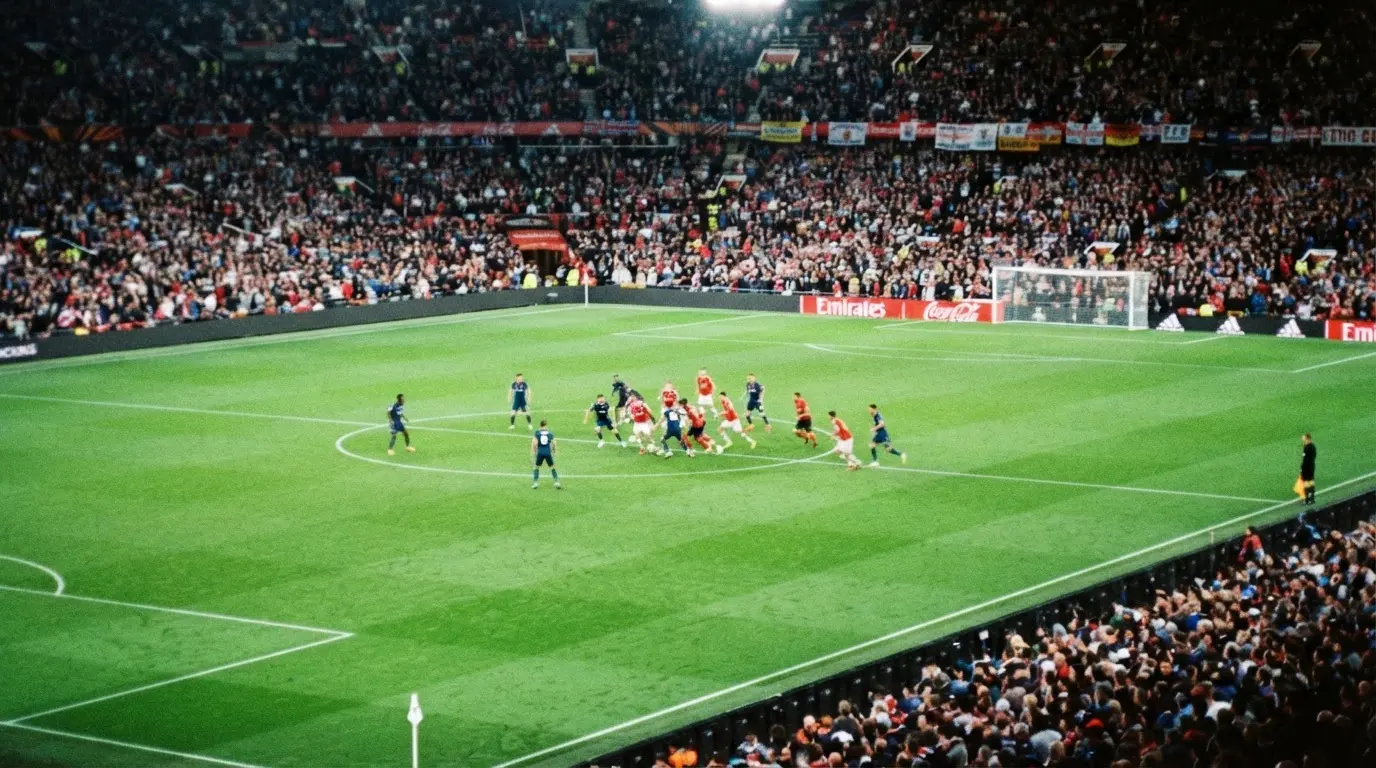
Asian lines exist because sharp bettors built them to balance a football book where one side was attracting the money. The market was carried west into British books by bettors who wanted a tighter spread than the 1X2 could offer, and the major UK operators now price them as standard on Premier League, Champions League and the larger international fixtures. The margin on the Asian line is typically tighter than on the equivalent 1X2 — sometimes 2% to 3% versus 5% to 7% — which is why serious football bettors spend their volume there.
Goals totals, both teams to score, and player markets
A total goals market (over/under 2.5) prices the number of goals in the match rather than the result. Both teams to score (BTTS) prices whether each side finds the net at least once. Player markets — first goalscorer, anytime goalscorer — price individual scoring events at substantially wider margins, because the bookmaker is pricing a long tail of outcomes with thin liquidity on most of them. A first-mover bet on a Premier League striker might run at 6/1, but the margin in the market as a whole is heavier than on the match result.

Accumulator, bet builder and same-game multi
An accumulator multiplies the odds of each leg into one price, so four legs at 2.00, 1.80, 2.20 and 1.50 become a single bet at 11.88. The margin compounds with each leg, because each leg carries its own slice of overround and the slice is taken out of each price before the legs are multiplied. A four-fold accumulator on heavy-margin markets can carry a built-in bookmaker edge of 15% or more, even when each individual leg looked ordinary.
Bet Builder products — same-game multis on Premier League fixtures, Bet Builder+ on bet365’s app combining markets from one event into a single bet pre-match and in-play — solve a related problem differently. They run on tighter margins because all the legs are correlated (a Manchester City win and a Haaland goal are not independent events), but they are also harder to price from the outside, because the bettor does not see how much each leg has been shortened. The product is convenient and it pays out faster; whether it carries a fair price depends on the bookmaker, and the bettor’s only check is to price the same legs at the exchange or split the bet into singles.
Each-way betting and multiples
Each-way betting is two bets of equal stake: one for the win, one for the place. The total stake is double the unit stake, and the place terms vary by race and event. Horse racing is the traditional each-way sport; some football outright markets — top goalscorer in a tournament, for instance — settle each-way, with place terms set by the bookmaker. Most football markets settle win-only.
In-play markets
In-play covers everything on the coupon, settled continuously during the match. Goals totals, match result, next goal, corners, cards, player markets — all reprice as the game moves. The margins on in-play are typically heavier than pre-match on the same selection, because the bookmaker carries more uncertainty on the live event and prices for it. A bettor who likes the price should take it when it appears; the price moves, and the cash-out value offered between placing the bet and settling is the bookmaker’s quote for closing that exposure.
Cash out and the price of closing early
A cash-out button appears on open bets once the match is live. Settling the bet early means accepting the bookmaker’s quote for closing the position now, rather than waiting for the full-time whistle and the full payout. The quote carries its own margin — the bettor is paying for the certainty of walking away with something — and on a market that is about to move against them the cash-out value is the price of avoiding a worse one. Cash out is offered by Fitzdares, 10bet and the rest of the licensed set as standard on football markets.
Football Competitions in 2026: What Is On the Fixture List
The Premier League season ahead
The 2026–27 Premier League runs from 21 August 2026 to 30 May 2027 with 20 teams. Coventry City, Ipswich Town and Hull City come up as the promoted clubs, replacing the three relegated at the end of 2025–26, and Arsenal start as defending champions. Every matchday across the season brings 380 fixtures, and the bookmaker’s Premier League market sits at the front of every football coupon in Great Britain.
From 2026–27 the Premier League clubs’ voluntary withdrawal of gambling sponsorship from the front of matchday shirts takes effect; sleeves and perimeter hoardings remain. That is a marketing change for the league, not a change in the betting markets that follow it, and the licensed operators continue to price the same fixtures in the same way.
The 2026 FIFA World Cup
The 2026 FIFA World Cup final was played on 19 July 2026; Spain beat Argentina 1–0 after extra time. By the time the domestic season opens, the 2026–27 UEFA Champions League group stage is already underway, and the European and domestic cups fill the autumn fixture list. Licensed UK books price every major tournament — Champions League, Europa League, Conference League, the FA Cup, the League Cup — and the bookmaker’s outright tournament markets (winner, top goalscorer, group stages) sit at the top of the football coupon from late summer.
The laws of the game that determine how a market settles
The Laws of the Game of association football are maintained by the International Football Association Board (IFAB), which has done so since 1886. A standard adult football match consists of two halves of 45 minutes each, with stoppage time added at the referee’s discretion. Each football team has a maximum of eleven players on the pitch, including the goalkeeper, and the goal is 7.32m wide and 2.44m high. A tied football match may go to extra time of two further 15-minute periods, and some competitions then use a penalty shoot-out.
These four points are the ones that settle markets. A goal scored in the 45th minute plus stoppage time counts as a first-half goal in the first-half-result market. A goal scored in extra time counts as a second-half goal in the 2.5 goals market but is settled separately on outright winner markets that count the trophy, not the ninety minutes. A player sent off in the 9th minute but re-entered from the bench under a competition’s substitution rules is still on the pitch for the purpose of the player markets. The settlement edge cases are where the bookmaker’s small print lives, and a punter who bets heavily on player props should know where the rules end and the house edge begins.
Ten Licensed Soccer Betting Sites in Great Britain: A 2026 Comparison
The comparison below covers ten operators each holding a Gambling Commission remote licence for general betting standard (real events). The licence number and licence holder are taken from the Commission’s public register, checked on 16 October 2026, and the operator’s own statement on each subject is taken from its public site or its app-store listing on the same date. A place in this table is not a licence, and it is not a recommendation — every operator listed is one of several dozen active remote licences in Great Britain, and a reader comparing options needs to see the picture.
| Brand | Gambling Commission remote licence | What the operator states |
|---|---|---|
| Betfair | 039439-R-319330-013 — PPB Counterparty Services Limited | In-play betting, Bet Builder, free live streaming of UK and Irish horse racing and football inside the app, and a 90 Minute Payout market |
| Fitzdares | 000400-R-103839-030 — Fitzdares Limited | Cash out, accumulators, Lucky 15s, specials and antepost markets on horse racing, football, tennis, rugby, cricket, golf and American football, with in-play live odds |
| BoyleSports | 039469-R-319383-025 — Boylesports Enterprise | Sports welcome offer for UK players: £20 in free bets when a £10 bet is placed (€30 in free bets for a €10 bet for Irish players) |
| Tote | 054779-R-331321-008 — TDCO Limited | Best Odds Guaranteed on UK and Irish horse racing from 8am on race day, on single and multiple bets; not on ante-post, tote or pari-mutuel |
| BetTom | 064959-R-339314-003 — Bet Tom Limited | Sports welcome offer: 50% back as a free bet of up to £50, with a matching 50% back up to £50 as free slot funds for casino play |
| Betboro | 044181-R-324363-007 — Webmedia Development N.V. | Sports welcome offer: 100% matched free bet of up to £25 on the first qualifying wager, requiring a debit card deposit of at least £10 and a first bet of £5 to £25 with at least three selections each at 3/5 (1.60) or higher |
| Fafabet | 057385-R-333191-006 — Taichi Tech Limited | Best Odds Guaranteed on UK and Irish horse racing win and each-way bets from 9am on race days |
| Dabble | 065677-R-340363-005 — Dabble Sports UK Ltd | Welcome offer: bet £10, get £10 in free bets on a first deposit for new customers, with minimum odds applying, 7-day free bet expiry and stake not returned |
| DAZN Bet | 048756-R-327274-019 — DZBT Limited | Deposits from £5 by debit card, Apple Pay, Paysafecard, Trustly and Skrill, and from £20 by PayPal, with no processing fees |
| 10bet | 043173-R-322899-023 — Blue Star Planet Limited | Sportsbook covering football, tennis and horse racing with cash out, Bet Builder and live streaming |
The pattern across the ten: every operator holds the same kind of remote licence, every operator’s licence is current as of the register check on 16 October 2026, and the differences between them live in the welcome offer, the cash-out, the live streaming and the bet-builder product rather than in the licence itself. The choice for the bettor is which combination of those products fits the kind of football betting they want to do — outright tournaments, in-play on a Saturday, each-way on the racing, accumulator specials on the Premier League — not which licence gives more protection, because they all run under the same Commission rules.
Where Soccer Betting Stands Legally in Great Britain
The Gambling Commission and the Act it runs
The Gambling Commission is the regulator for commercial gambling in Great Britain, and it operates under the Gambling Act 2005. The Act covers England, Scotland and Wales; Northern Ireland is outside it and runs on its own older law, so a “Great Britain licence” never extends to Northern Ireland, and a reader in Belfast is in a different regulatory frame. A bookmaker serving customers in Great Britain needs a Gambling Commission licence wherever the operator itself is based — that rule took effect with the Gambling (Licensing and Advertising) Act 2014 and it closes the loophole that used to let offshore brands serve British customers without a Commission licence. A Curaçao, Maltese or Gibraltar licence is not a substitute for the British one.
There is no state monopoly on sports betting in Great Britain, no cap on the number of licences, and no statutory list of permitted sports or markets. The Commission issues licences by category — remote general betting standard (real events), remote general betting standard (virtual events), remote general betting limited, remote pool betting, and remote betting intermediary (the licence that covers betting exchanges) — and the operator offers markets under its own licence conditions and the LCCP. In-play betting is offered by GB bookmakers under those conditions; it is not unrestricted as a legal conclusion, and the controls are operator-level rather than statute-level. Esports are treated like any other event under the licence categories; virtual events are a separate category; bets on politics, TV shows and novelty markets exist with no statutory prohibition. Spread betting on financial instruments sits with the Financial Conduct Authority, not the Commission.
The public register is the test
The Commission’s public register is searchable by business name, trading name, domain or account number, and it is the whole test of whether a brand holds a current licence. The register also names the licence holder, which is not always the same company as the trading name — Ladbrokes and Coral, for instance, run under one licensee — and the audit of a brand starts at that register entry. Licences carry no expiry date in the casual sense; they are issued and then either active, suspended or revoked, and a reader who wants to check a brand enters the domain or the brand name and reads the entry.
A licensed operator uses both .com and .co.uk addresses interchangeably; the domain extension proves nothing. The check is the register, not the URL.
Verification, age and the rule against anonymous play
The minimum age to bet in Great Britain is 18, and licensed remote operators must verify the customer’s name, address and date of birth before the first deposit or any gambling, including with a free bet or bonus. That rule has been in force since 7 May 2019 and it kills anonymous play on a licensed site. A reader comparing this with the offshore market will notice the difference: at a licensed bookmaker the operator knows who the customer is, and at an unlicensed one it does not. Both are choices with their own costs.
Credit cards are out
Credit cards are banned for gambling in Great Britain, including credit-card-funded e-wallet payments. The rule has been in force since 14 April 2020 under LCCP condition 6.1.2. Debit cards and bank-based payments are not covered by the ban, which is why every licensed operator accepts Visa Debit, Mastercard Debit and the Faster Payments transfer as standard, and why DAZN Bet takes deposits from £5 by debit card, Apple Pay, Paysafecard, Trustly and Skrill and from £20 by PayPal. No licensed operator takes a cryptocurrency deposit and no statutory rule was found that would prevent one; the absence in the licensed set is a market feature rather than a regulatory one.
Bonuses and Free Bets on Soccer: What the Marketing Word Actually Costs
The shape of a sports welcome offer
A sports welcome offer is the headline marketing product on the front of every licensed bookmaker, and it takes several forms. BoyleSports’ UK offer pays £20 in free bets when a £10 bet is placed; Irish customers get €30 in free bets on a €10 bet. BetTom’s offer is 50% back as a free bet of up to £50 with a matching 50% back up to £50 as free slot funds for casino play. Betboro’s offer is a 100% matched free bet of up to £25 on the first qualifying wager, requiring a debit card deposit of at least £10 and a first bet of £5 to £25 with at least three selections each at 3/5 (1.60) or higher. Dabble’s offer is bet £10, get £10 in free bets, on a first deposit for new customers, with minimum odds applying, a 7-day free bet expiry and the stake not returned.
The differences are not in the “free” word — every offer is described as free — but in what sits behind it. BoyleSports pays in free bets on a £10 qualifying bet, with the £10 stake lost if the qualifying bet loses; Betboro’s qualifying bet has to be a treble with each leg at 1.60 or higher; Dabble’s free bets expire inside a week; BetTom splits the welcome between sports and casino so half the value sits on the casino side. None of these details appear on the front of the coupon, and a reader who clicks the headline without reading the small print has already lost the value the offer was trying to give.
Free bets, the stake and the rule that wins quietly
The British convention on a free bet is that the stake is not paid back with the win. Place a £10 free bet at 3.40 and a winning bet returns £34; the £10 stake is not returned, so the net profit is £24. The hard return is the same, the net is lower than it would be on a paid stake, and the difference is the price of taking the bookmaker’s money rather than your own. Dabble’s offer spells the rule out: “stake not returned”. The others let the rule run as a default on the sportsbook.
The wagering cap on bonuses
Wagering requirements on bonuses are capped at 10x as of 19 January 2026. A £10 bonus with a 50x requirement needed £500 of qualifying bets; under the cap no more than £100 of qualifying bets is needed on any welcome offer. The cap applies to bonuses with a wagering condition; whether it applies to free bets with no wagering condition is not settled, and the bettor reading BoyleSports’ £20-in-free-bets offer or Betboro’s matched free bet is reading an offer without a wagering requirement attached. Mixed-product promotions — a sportsbook offer that requires a casino spin to clear, for instance — are banned under the same rule.
What the offer costs the bettor
A free bet’s value is not the headline number. It is the headline number multiplied by the value the offer actually carries when the bet is placed and won at a price that a representative market can sustain. A £10 free bet at 2.50 on a market with a 95% payout share is worth about £14.30 — the £10 stake not returned, the £15 profit at 2.50 with a 5% margin built into the price, and the £10 stake forgone is the cost of taking the free money in the first place. A £10 free bet at 1.40 is worth about £3.50, because the short price pays back almost nothing and the margin takes most of what is left.
A welcome offer that reads as £20 in free bets on a £10 qualifying bet costs the bettor the £10 stake on the qualifying bet, the lost edge on the qualifying market, and the stake-not-returned rule on the free bet itself. The arithmetic lands somewhere between “worth taking” and “an expensive way to bet on football” depending on the price the free bet is taken at and the market it is taken in. A punter who reads the small print finds the value; a punter who reads the headline finds the marketing.
Mobile and App Betting on Soccer in Great Britain
What the major apps do on a Premier League Saturday
bet365 is the official global betting partner of the UEFA Champions League and its app is the most downloaded sports betting app in the UK. The bet365 app carries Bet Builder+ combining markets from one event into a single bet pre-match and in-play, Super Boosts, Winnings Boosts on Bet Builders and selected singles, and daily Bet Boosts. Betfair’s app carries in-play betting, Bet Builder, free live streaming of UK and Irish horse racing and football, and a 90 Minute Payout market that settles any single match bet as a win if the backed side leads by two goals at any point. Fitzdares’ app offers cash out, accumulators, Lucky 15s, specials and antepost markets on horse racing, football, tennis, rugby, cricket, golf and American football, with in-play live odds.
Every licensed UK bookmaker runs a native iOS and Android app, and every one of them allows deposits, bet placement and withdrawals from the same account. The differences between the apps are in the features that sit on top of the core product: live streaming, bet builder, cash-out, in-play depth, acca specials, odds boosts, withdrawals speed.
Browser play, smaller screens and the punters who do not download
A reader who does not want an app still has the full product in the browser on every licensed operator’s site. The browser version mirrors the app on the desktop and is somewhat pared back on a phone; the bet slip sits at the bottom of the screen, the cash-out button sits on the open bet, and live streaming plays through the same embedded player. The browser path is the one most casual punters follow: a link in a chat, a price comparison on a tipping site, a Google result on a Premier League coupon. The app path is for punters who bet several times a week and want the cash-out, the live stream and the bet builder on a single screen.
The deposit rules that sit underneath
DAZN Bet takes deposits from £5 by debit card, Apple Pay, Paysafecard, Trustly and Skrill and from £20 by PayPal, with no processing fees on either route. That is the bottom of the licensed deposit range and it is typical of the modern UK bookmaker: a £5 minimum on the standard payment rails, with PayPal sitting a step higher because of PayPal’s own processing costs. Credit cards are out under the LCCP. Cryptocurrency deposits are not offered by any licensed operator on this list, and the bettor who wants to bet with Bitcoin is, by definition, betting on an unlicensed site and giving up the protections that come with a GB licence.
Live Betting and Cash Out on Soccer
In-play and what it changes about the price
Live betting on football settles bets continuously during the match. The bookmaker re-prices every market as the score, the time and the expected remaining goals change, and the bettor’s open position sits in a market that no longer matches the one they entered. A Liverpool–Manchester City match at 0–0 with 2.10 on the home win at kick-off becomes 1.50 on the home win the moment Liverpool scores in the 23rd minute, and the bettor who placed the bet at 2.10 is sitting on an undeclared win; the bettor who placed the bet on the draw is sitting on an undeclared loss.
Betfair, Fitzdares, 10bet, Midnite and the rest of the licensed set carry in-play football markets on Premier League, Champions League and the major international fixtures. Midnite’s site shows in-play events, an acca builder, popular accas and price boosts with maximum-stake limits. The in-play market depth varies by bookmaker — the bigger the trading team, the more markets and the faster the price — but the product itself is the same.
Cash out as the price of leaving early
The cash-out button settles the bet at the bookmaker’s quote for closing it now. The quote carries its own margin, because the bookmaker is taking on the rest of the match on its own book and pricing the certainty of walking away. On a bet that is winning, the cash-out value is less than the full payout would be at full-time; on a bet that is losing, the cash-out value is more than zero. Either way it is a price, not a gift, and the bettor paying for the convenience is the bookmaker’s customer, not its creditor.
10bet, Fitzdares, Betfair and the rest of the licensed set carry cash out as standard on football. The product is marketed as “take your profit” or “cut your losses”, and the language hides the fact that it is the bookmaker’s quote, not the customer’s. On a market that is moving fast — a derby match, a Champions League knockout tie — the cash-out value is set by an algorithm and shown for a short window; the bettor who hesitates loses the window and the price.
Live streaming and the Premier League fixture
Free live streaming inside the app is the feature that splits the licensed set. Betfair streams UK and Irish horse racing and football for free inside the app on the relevant product; 10bet lists live streaming among its sportsbook features alongside cash out and Bet Builder. Other operators on this list carry live streaming only on horse racing or only behind a qualifying bet. A reader who wants to watch the Premier League fixture while betting on it has a short list of operators to compare; a reader who bets on the football and watches on a separate subscription has every operator on this list.
Tips and Predictions on Soccer: What Is and Is Not on Offer
The market for tips
The search for soccer betting tips, free soccer betting tips and soccer bets today is the cluster that runs alongside the odds themselves. A tipster service sells forecasts on football fixtures, with prices on a monthly subscription, a one-off payment, or a free Telegram channel; the free ones monetise by sending the reader to a bookmaker, the paid ones monetise by the subscription. The quality of the service is not measurable from the outside, and a tipster’s published record overstates the edge a subscriber actually realises.
Why the price still beats the tip
A tip that names a winner is not worth the price the tipster charges, because the bookmaker has already priced that outcome into the market. If the tip named a winner that the market had not seen, the backer’s bet would have been refused or the price would have moved by the time the bet was placed. A tipster’s record is a comparison between the tipster’s call and the closing line of the market, and the closing line is the bettor’s real benchmark. A tipster who consistently beats the closing line is worth subscribing to; a tipster who does not is selling the reader a feel-good story about football.
Bankroll and the discipline of staking
A bankroll is the budget a punter sets aside for betting, and the discipline of staking is the rule for how much of that bankroll goes on each bet. The flat-stake approach — the same £10 on every selection regardless of confidence — is the discipline that protects the bankroll through a losing run. The variable approach — bigger stakes on stronger opinions, smaller ones on weaker — lets the punter back their conviction but introduces the temptation to chase losses by over-staking on a desperate bet.

The arithmetic of staking does not change the fact that the bookmaker’s margin sits inside every price. A punter staking £10 at 2.00 every match is paying the bookmaker the margin on £10 of turnover, regardless of which selection wins. The way to beat the margin is not to stake harder; it is to find prices where the margin is thinner and where the punter’s read of the fixture is sharper than the market’s.
Strategy as a way to read the fixture
Soccer betting strategies range from laying the draw on a betting exchange (backing the home win and the away win, leaving the draw to be matched) to following team-news-driven price moves (taking the price before the team news breaks, hoping the price moves the punter’s way after). Both strategies work for some bettors in some markets and both lose money for the same bettors in the same markets in other weeks. The strategy is the framework, not the edge; the edge is whether the punter’s read of the fixture is sharper than the market’s, and that is not a strategy a tipster can sell.
Responsible Gambling and the Tools Every Licensed Bookmaker Carries
GAMSTOP and the right to switch off
GAMSTOP is the national multi-operator self-exclusion scheme and a mandatory licence condition for online operators since 31 March 2020. A punter who registers with GAMSTOP is excluded from every licensed online bookmaker for the chosen period — six months, one year, five years, or five years with auto-renewal — and after the minimum period the exclusion stays in place for a further seven years unless the punter asks GAMSTOP to remove it. Betting shops use a separate self-exclusion service and are not covered by GAMSTOP.
Kalooki Sportsbook, Midnite, Unibet and every other licensed operator on this list is a GAMSTOP member, and the registration is honoured across the whole licensed online set. A punter who wants to stop is one registration away from stopping at every GB-licensed online bookmaker.
The financial vulnerability check and the £150 trigger
A financial vulnerability check has applied to licensed remote betting since 30 August 2024. When a customer’s deposits minus withdrawals exceed £150 in a rolling 30-day window (the threshold took effect on 28 February 2025), the operator runs a public-record check — bankruptcy, county court judgments, similar registers — and considers the result before accepting more deposits. The check is not an income check and not a credit reference check; it looks at public-record markers of financial difficulty and asks the operator to act on what it finds. Financial risk assessments (the affordability checks of the press) are announced in a staged plan with no start date; the bettor reading about them in the press is reading about a future change, not a current one.
Deposit limits and the punter’s own ceiling
A licensed operator must offer a gross deposit limit on a fixed time frame. The first changes have applied since 31 October 2025 and a second phase was postponed to 30 September 2026, with whether that second phase is live not established in the public record. There is no state-set deposit or loss ceiling for betting; the limits are the punter’s choice. A reader who wants to cap their own betting sets the limit with the operator; a reader who wants to switch off altogether registers with GAMSTOP.
The places to get help
GamCare runs the National Gambling Helpline. GambleAware funds treatment and education. The NHS runs gambling clinics in several regions. Gamblers Anonymous runs peer-support meetings. Fitzwilliam Sports’ site links to GambleAware, GamStop and Gamblers Anonymous as standard, and the other licensed operators carry the same links on their safer-gambling pages. A punter who feels their betting is no longer fun has somewhere to take that feeling before it becomes a problem, and the licensed operator is required to point them there.
Soccer Betting and Cryptocurrency: The Licensed Market Does Not Carry It
What the licensed set accepts
The licensed UK bookmakers on this list accept debit cards, bank transfers, Apple Pay, Google Pay, PayPal, Skrill, Neteller, Paysafecard, Trustly and a handful of other payment rails. DAZN Bet’s deposit list — debit card, Apple Pay, Paysafecard, Trustly and Skrill from £5, PayPal from £20 — is the shape of the modern licensed deposit menu. Cryptocurrency is not on that menu and no licensed operator on this list takes a Bitcoin deposit.
The rule on credit cards
Credit cards have been banned for gambling in Great Britain since 14 April 2020, including credit-card-funded e-wallet payments. The ban closes the credit-funded gambling loop at the payment rail. Cryptocurrency sits outside the ban — the ban names credit cards and credit-card-funded e-wallets, not Bitcoin — and a licensed operator that wanted to take Bitcoin deposits could do so in principle. None of them does. The reason is a commercial one: cryptocurrency deposits create compliance work for the operator on source-of-funds, and the volume is not large enough to justify the work.
Where the bettor who wants Bitcoin actually bets
The reader who wants to bet on soccer with Bitcoin ends up at an unlicensed operator, because the licensed UK set does not carry the payment rail. The unlicensed operator is licensed somewhere else — Curaçao is the common jurisdiction — and is not licensed by the Commission, and the bettor using it has none of the British protections: no GAMSTOP coverage, no Commission complaints route, no approved dispute-resolution body, no British consumer redress if funds are withheld, not bound by the 10x bonus cap or the £150 vulnerability check. A reader who wants Bitcoin and is willing to give up the protections has a market to choose from; a reader who wants the protections has the licensed set and no Bitcoin.
What the British Soccer Betting Market Looks Like from the Outside
The British soccer betting market in 2026 is a competitive market with several dozen licensed remote operators, no state monopoly, no statutory list of permitted markets, and a regulator that runs the public register as the only test of whether a brand holds a licence. The shape of the market is set by the bookmaker’s margin, which sits inside every price and is visible only to a reader who adds up the implied chances on a single market; the deeper the market, the thinner the margin, and the featured Premier League and Champions League matches carry the thinnest margin on the licensed books. Welcome offers run as headline products on the front of every bookmaker, with the value sitting in the small print rather than the headline; the wagering cap of 10x as of 19 January 2026 has tightened the field since the early offers of the previous decade.
For the punter comparing options, the question is which combination of welcome offer, in-play depth, live streaming, bet builder and cash out fits the kind of football betting they want to do, on a licensed bookmaker with a current Gambling Commission licence and a GAMSTOP registration. The licence check is the register check — by business name, trading name, domain or account number — and a place in any comparison is not a licence.
Frequently asked questions
What is draw no bet in soccer?
A draw no bet collapses the 1X2 market to two outcomes: the home win or the away win. Back the home side at draw no bet and the bet wins on a home victory. If the match ends level, the stake is returned — the draw is taken out of the picture. The price is shorter than the straight 1X2 home win because the bookmaker is no longer carrying the risk of the third outcome, and the bet suits the cautious punter who wants the win-or-refund structure.
What is asian handicap in soccer betting?
Asian handicap gives one side a head start measured in goals to cancel out the draw on a single market. A handicap of -1.5 means the backed side has to win by two or more; +1.5 means the side can lose by one goal and still win the bet. A split handicap across two lines, written as -0.5/-1, refunds half the stake if the result lands on the split. The market runs on tighter margins than the equivalent 1X2 — often 2% to 3% — and is offered by major UK bookmakers on Premier League, Champions League and the larger international fixtures.
What is double chance in soccer betting?
A double chance bet backs two of the three possible outcomes at once. Backing the home win or the draw pays if either happens; backing home win or away win pays on any result except the draw; backing draw or away win pays on any result except the home win. The price is shorter than the single-outcome equivalent because two outcomes are covered, and the bet suits the punter who wants to back a heavy favourite without taking the draw risk on a coupon priced tightly enough that the draw looks likely.
How can it be checked that a bookmaker holds a Gambling Commission licence?
The Gambling Commission’s public register is searchable by business name, trading name, domain or account number, and it is the whole test of whether a brand holds a current licence. The register entry names the licence number, the licence holder and the licensed categories, and a reader who wants to check a brand enters the domain or the trading name and reads the entry. A brand that does not appear on the register does not hold a GB licence, no matter what the marketing material says.
How is the return on a bet worked out from the stake and the odds?
In decimal odds, the return is the stake multiplied by the odds. A £10 stake at 3.40 returns £34, with a net profit of £24. In fractional odds, the stake is multiplied by the fraction and added back: £10 at 11/10 returns £10 plus £11 in profit, total £21. A combination bet multiplies the odds of the legs into one price before applying the stake; four legs at 2.00, 1.80, 2.20 and 1.50 become a single bet at 11.88, so a £10 stake returns £118.80 on a winner.
What is the bookmaker’s margin and how can it be seen in the odds?
The margin is the slice of every pound staked that the bookmaker keeps, and it is built into the prices on a market. On a three-outcome 1X2 market, the implied chances on each outcome — one divided by the decimal price — add up to more than 100%, and the excess is the margin. A market at 2.10 / 3.40 / 3.60 carries an implied payout share of about 95.4% and a margin of roughly 4.6%, in the middle of the typical Premier League range. The margin compounds on accumulator bets because each leg carries its own slice and the slice is taken before the legs are multiplied.
Safe & legal – Socceroddshub.com
Content created by the «Socceroddshub.com» team
